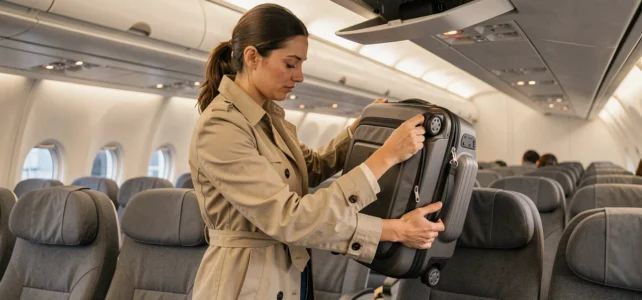
At Transavia, the Basic fare only includes a small personal bag that fits under the seat. Any baggage intended for the overhead bin is a paid option, charged at a variable price depending on the time of purchase. The difference between an early online addition and a correction at the boarding gate can exceed several dozen euros, a gap that most passengers discover too late.
Paid overhead bin at Transavia: pricing mechanics and pitfalls at the gate
The use of the overhead bin has become a significant revenue stream for Transavia since 2024. The airline now charges a specific fee for placing a cabin suitcase in the overhead compartment, in addition to the free small personal bag.
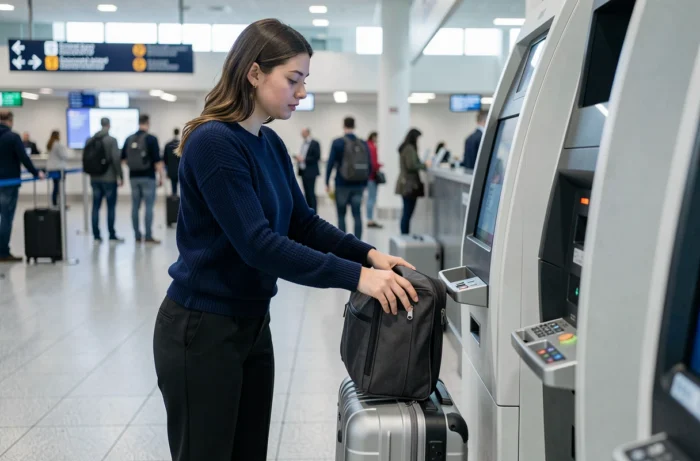
The major trap lies at the boarding gate. Several European comparisons of baggage fees indicate that Transavia applies a surcharge starting at 70 euros for an unreserved or non-compliant cabin bag that must be checked at the last moment. This amount far exceeds the price paid online during booking or through the management space.
We recommend considering this additional cost at the gate as a risk ceiling, not just a simple theoretical penalty. Compliance checks (size and weight) are becoming increasingly systematic before boarding, including on domestic flights.
To fully understand this mechanism and add a cabin bag on Transavia at the best time, it is essential to distinguish three purchasing windows with very different rates.
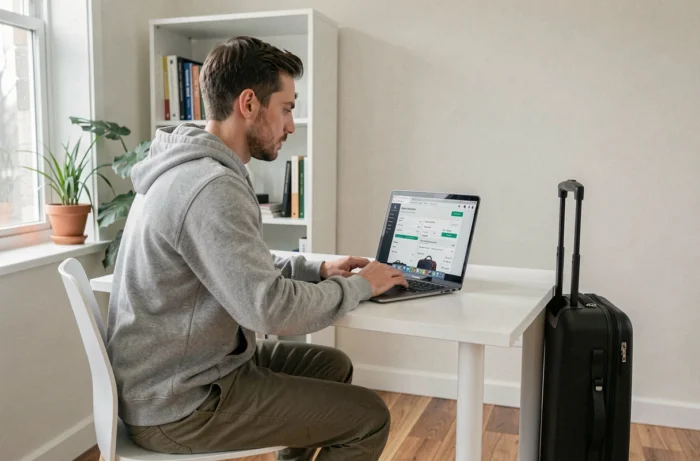
Transavia cabin bag purchasing windows: when to pay the least
The lowest fare is obtained at the time of flight booking. Transavia offers the cabin bag option on the extras selection screen, just after choosing seats. This is by far the cheapest tier.
Adding after booking via Manage My Booking
The second window opens in the “Manage My Booking” section on the Transavia website or app. The fare here is higher than that offered during the initial booking but remains significantly lower than the airport price.
The addition remains possible until a few hours before departure. After this deadline, the only option is at the counter or boarding gate, with the highest fare.
Correction at the airport: the scenario to avoid
At the check-in counter or at the gate, non-compliant cabin baggage is systematically charged at the maximum rate. With fees reaching 70 euros or more, this scenario turns an initial saving of a few euros into a disproportionate expense.
We observe that the majority of disputes on traveler forums concern precisely this situation: a passenger who thought their bag would pass without extra charges and ends up paying at the gate.
Dimensions and weight of Transavia cabin baggage: the rules that make the difference
Transavia distinguishes between two categories of allowed cabin baggage. Confusing them is the primary source of unexpected fees.
- Free personal bag: a small bag, briefcase, or backpack that must fit under the seat in front of you. The dimensions are strictly controlled at the gauge.
- Paid cabin baggage (overhead bin): trolley suitcase or larger bag intended for the overhead compartment. Its addition requires the purchase of the option, and the maximum allowed dimensions are checked at the gauge before boarding.
- Maximum weight: the weight limit applies to paid cabin baggage. An excess detected during the check results in forced check-in with charges at the gate rate.
A technical point often overlooked: the physical gauges installed at Transavia boarding gates are strictly calibrated. A suitcase that “fits by forcing” does not pass the test. We recommend checking your suitcase dimensions at home, including handles and wheels, as these elements are counted in the overall dimensions.
Plus fare and packages: when the cabin bag is already included
The Plus fare from Transavia automatically includes the cabin bag for the overhead compartment. For a traveler who knows in advance that they will be carrying a trolley suitcase, comparing the Basic fare + baggage option with the Plus fare is the only way to avoid overpaying.
On certain flights (notably seasonal routes to Morocco or Greece), the gap between Basic + cabin baggage purchased online and the Plus fare is sometimes marginal. In this case, the Plus fare also offers other benefits (seat, priority boarding) that justify the extra cost.
On the other hand, on short low-cost flights, the Basic fare without any extras remains unbeatable if you are traveling only with a small personal bag under the seat.
Technical errors that trigger fees at boarding
Beyond simple forgetfulness, some technical errors generate fees that classic guides do not mention.
- Booking through a third party (online agency, aggregator): the cabin baggage option is not always transferable or visible in “Manage My Booking” on the Transavia website. Sometimes you have to go back through the agency to add the option, which extends delays and may incur additional costs.
- Flight modification after adding baggage: a change of date or time can, depending on the conditions, dissociate the baggage option from the new booking. Always check that the option still appears in the summary after any modification.
- Double cabin baggage: Transavia only allows one paid cabin bag per passenger in addition to the personal bag. Attempting to board with two trolleys automatically triggers the check-in of the second, with charges at the gate rate.
The booking summary is the only document that is valid. We recommend capturing it in PDF or screenshot before each flight, especially if the booking has been modified or made through an intermediary.
One last practical point: the European regulation on free cabin baggage is under discussion at the EU level, but no legal obligation currently forces low-cost airlines to include an overhead bag free of charge. The cabin baggage surcharge at Transavia remains a pricing option, not an anomaly.