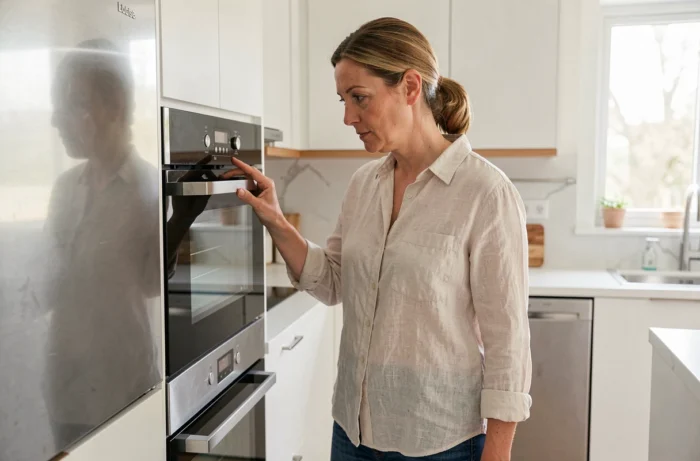
Optimizing your home on a daily basis starts with a technical question: which equipment solves a concrete problem in the home, and for how long? The choice is not limited to comparing prices or brands. It is based on measurable criteria such as energy consumption, expected lifespan, and compatibility with the existing layout of the rooms.
Thermal regulation of the home: what the regulations really require
The confusion between connected thermostats and regulatory thermostats is common. Current regulations target the functions of automatic regulation and heating programming, not Wi-Fi connectivity or access to a mobile app. A classic programmable thermostat, without any connected function, may be sufficient to meet the legal obligation.
Before investing in a more expensive connected model, check if your heating system already has a timer and an ambient temperature sensor. If so, adding a connected thermostat is a matter of additional comfort, not compliance.
For tenants, the question arises differently: the obligation to implement falls on the landlord. An already installed piece of equipment, even basic, can meet the requirements if its programming function is active. Consulting the idhabitat.fr website for equipment allows for comparing regulation devices suitable for each type of heating.

Durability index: a selection criterion for household appliances
The energy label is known to most buyers. The durability index, however, is newer and changes the way appliances intended to stay in a home for a long time are compared.
In France, this index applies to televisions from January 2025 and to washing machines from April 2025. It incorporates criteria for reliability, availability of spare parts, and ease of maintenance, in addition to the existing repairability score.
Devices not covered by the index
Large household appliances such as refrigerators, ovens, or dryers are not yet covered by the durability index. For these purchases, comparing consumption, availability of parts, and repair conditions separately remains the most reliable method.
Specifically, this means checking with the manufacturer if spare parts are guaranteed for several years, and whether a network of authorized repairers exists nearby. A cheaper appliance at purchase but irreparable after three years costs more than a durable model over the same period.
Interior layout and furniture choices: reason by use, not by room
Classic layout guides break down advice room by room: kitchen, living room, bathroom. This approach encourages multiplying specific purchases without checking if the same equipment can serve multiple spaces.
A modular storage unit, for example, works just as well in a narrow hallway as in a bedroom. A directional track light adapts to a kitchen countertop as well as to a desk. Reasoning by function rather than by room reduces the number of purchases and frees up space.
Concrete criteria for deciding on a furniture purchase
- The actual dimensions of the available space, measured to the nearest centimeter (including open doors and passages), avoid returns and proportion errors
- The weight of the furniture matters as much as its volume: a piece of furniture that is too heavy to be moved alone complicates any future rearrangement
- Compatibility with the existing flooring (suitable feet, non-slip pads) preserves the home without additional work
- The useful depth of storage, often overlooked, determines whether the furniture will actually be used or serve as a surface for accumulation

Housing adaptation and financing: MaPrimeAdapt’ in practice
For individuals facing a loss of autonomy or a disability, housing adaptation can benefit from public funding. MaPrimeAdapt’, managed by Anah since 2024, covers certain specific works: installation of grab bars, replacement of a bathtub with a walk-in shower, widening of doors.
The aid is not automatic. It is subject to resource conditions and requires a prior diagnosis of the housing. The work must be carried out by referenced professionals, which excludes self-renovation.
Often underestimated safety equipment
- Motion-activated lighting in hallways and staircases reduces the risk of nighttime falls without intervention on the existing electrical circuit
- Toilet or chair risers can be installed without work and significantly improve comfort
- Non-slip bathroom coverings can be laid over existing tiles and do not require floor replacement
Progressive adaptation, equipment by equipment, allows testing each solution before engaging in heavier work. A simple and reversible adjustment is often better than a complete renovation decided too quickly.
The choice of equipment for the home is rarely made on a whim in the store. Checking regulatory compliance, consulting the durability index when available, measuring the actual available space, and inquiring about financial aid before purchasing: these steps take time, but they prevent premature replacements and unnecessary expenses.