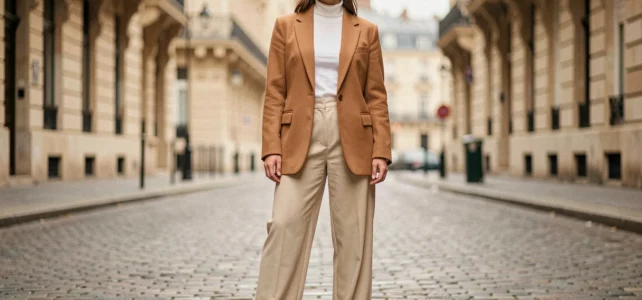
The wardrobe for the fall of 2026 is not just a checklist of items. Three underlying movements are reshaping fashion trends this season: a European regulatory framework that is concretely altering the textile offer, an acceleration of the second-hand market impacting silhouettes, and distinct stylistic choices regarding volumes and materials. We analyze what is really changing.
ESPR Regulation and Fashion Season 2026: What Brands Can No Longer Do
The European regulation ESPR (Ecodesign for Sustainable Products Regulation, EU 2024/1781), which came into effect on July 18, 2024, is producing its first concrete effects on the fall collections. Since July 19, 2026, large companies are no longer allowed to destroy unsold textiles and shoes.
This is not a weak signal. It means that production volumes are recalibrated upstream, with shorter runs and more frequent restocks. For the informed consumer, the direct consequence is a programmed scarcity of certain seasonal pieces.
We are also observing the emergence of the digital product passport (DPP), which will gradually accompany each garment sold in the European Union. This system traces the composition, origin of materials, and manufacturing conditions. Brands that were used to playing on the ambiguity of their labels are losing this margin. To follow these changes at the intersection of style and regulation, the Bridge News website dedicated to fashion regularly documents these sectoral evolutions.
Second-Hand and Authenticated Vintage: The Structural Fashion Trend of 2026
According to the ThredUp 2026 Resale Report quoted by Fortune in August 2026, the global second-hand clothing market is expected to reach $393 billion by 2030, growing at about twice the rate of the new clothing market.
H&M indicates that resale already accounts for 0.8% of the group’s revenue, with a 31% increase in resale income over one year. It is no longer a marginal channel reserved for activist consumers.
What is changing for this season’s looks:
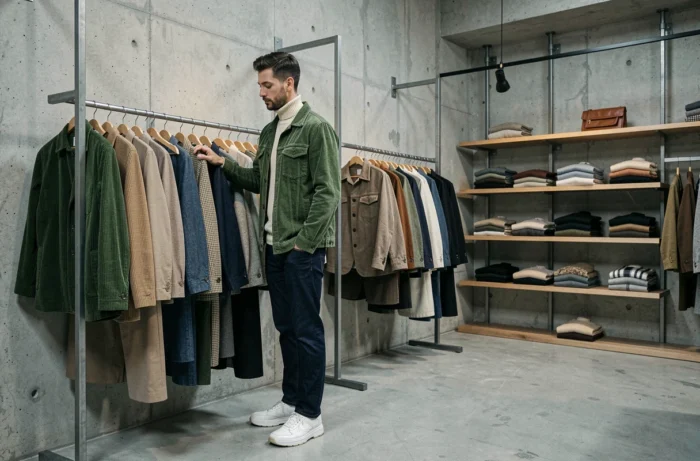
- Authenticated vintage pieces (worn leather, raw denim from past collections, period military jackets) are becoming sought-after style markers, not cheap substitutes
- Resale platforms are directing searches toward cuts and materials that fast fashion does not reproduce, pushing the wardrobe toward more unique silhouettes
- The mix of new and second-hand in the same look is now a stylistic code in its own right, worn by the designers themselves during the spring-summer 2026 shows
A significant portion of seasonal silhouettes now comes from resale and vintage. Ignoring this circuit means missing out on part of the wardrobe that is actually worn.
Volumes, Materials, and Colors: The Stylistic Choices of the Season
The barrel jean has established itself as the key cut, and we do not see a retreat for the fall. Its high-waisted construction with pronounced volume at the thighs and then a taper at the ankle creates an architectural line that replaces slim and wide-leg styles in the most informed wardrobes.
Premium Materials and Raw Touch
The trio of smooth leather, suede, and denim dominates the fall runways. The collections from Milan and Paris have massively featured these materials in sober shades: khaki, olive green, tobacco brown, deep black. The focus on textures takes precedence over prints.
The premium military style is permeating both men’s and women’s wardrobes. Aviator-inspired jackets, structured parkas, and fitted cargo pants are replacing the streetwear versions from previous seasons. The difference lies in the quality of the fabric and the precision of the cut, not in the camouflage pattern.
Color Palette: Controlled Intensity
The colors of the season oppose two registers. On one side, an earthy and mineral base (olive, taupe, burgundy). On the other, saturated touches placed on a single piece of the look: butter yellow, bright orange, sky blue.
The implicit rule we observe on the runways: one colored piece per silhouette, the rest in neutral tones. This principle of controlled intensity distinguishes well-executed looks from haphazard accumulations.
Fashion Accessories and Details to Watch This Season
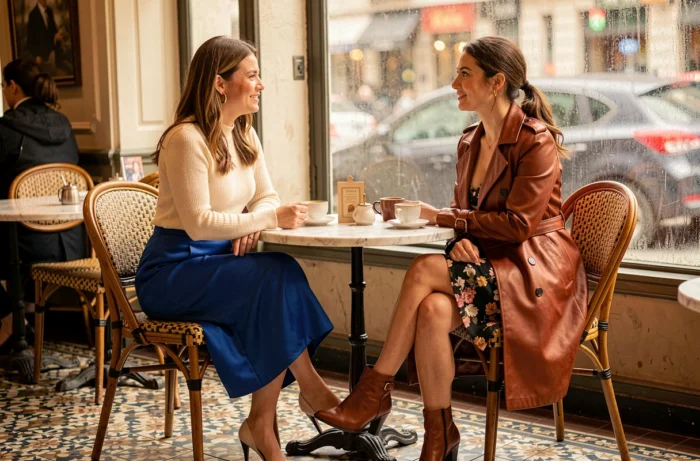
Expressive accessories are making a strong comeback, but with a precise vocabulary. Architectural brooches, oversized belt buckles, and structured bags are taking the place of the minimalist accessories that have dominated for several seasons.
- Open-toe ballet flats are establishing themselves as an alternative to flat sandals, worn with fine mesh socks for the early weeks of fall
- Elaborate collars (bow tie collar, officer collar, thick knit shawl collar) are becoming the detail that anchors a basic piece in the season
- Small-scale patterns (micro-stripes, tight houndstooth) are replacing large graphic prints on shirts and dresses
The Pinterest Predicts report, which analyzes searches on the platform to anticipate rising pieces, confirms the rise of coordinated sets as an alternative to the classic suit. A top and bottom in the same fabric, worn together or separately, offer a modularity that traditional suits do not allow.
The fall of 2026 is about the precision of choices, not their quantity. A well-cut barrel jean, a military jacket in premium fabric, a characterful accessory, and a saturated color placed in the right spot are enough to create a look rooted in the season. The rest is just noise.