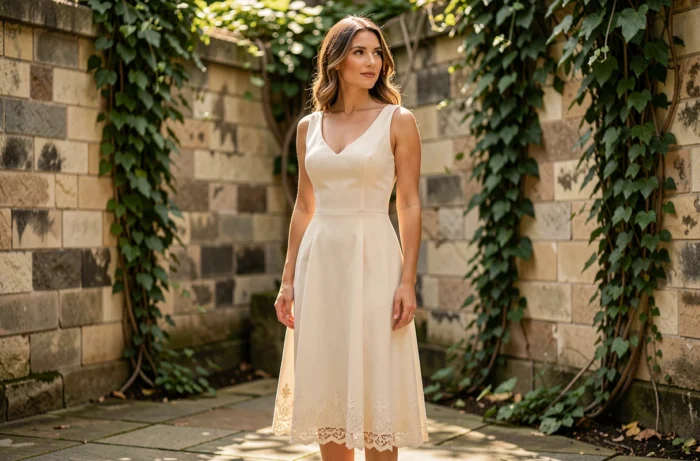
A civil wedding dress represents a budget that most brides do not wish to confine to just a few hours of ceremony. The question then arises: what cuts, what materials, and what types of outfits truly allow for a second life after the big day, without resembling a costume out of context?
Reusable materials and cuts: what distinguishes a civil wedding dress from a classic ceremony dress
The civil wedding does not set any national dress code. The celebration must be public and take place in front of the civil status officer, but the texts do not prescribe any mandatory outfit. A short dress, a suit, a jumpsuit, or a coordinated set are legally possible.
This freedom radically changes the game for reuse. Where a long ceremony dress with a train and veil remains difficult to wear again, an outfit for a civil wedding designed from the purchase as versatile can integrate into a daily wardrobe.
Several criteria separate a reusable piece from one that will end up at the back of a closet. Among the outfits on Esprit Mariage, we find these common characteristics among pieces that can be easily worn again:
- Fluid and non-transparent materials (crepe, matte satin, blended linen) transition from the nuptial register to a dressed dinner without modification
- Structured cuts without specifically nuptial embellishments (no beaded embroidery, no excessive floral lace) blend into an evening wardrobe
- Colors like ivory, champagne, or off-white are easier to wear again than pure white, which remains visually associated with weddings
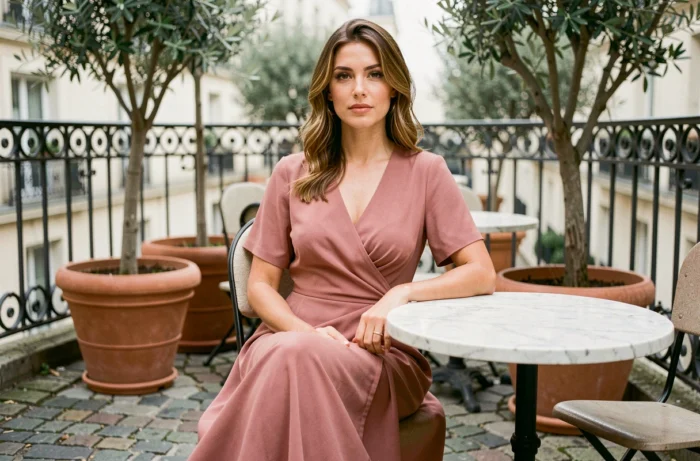
Suit, jumpsuit, or short dress: a comparison of civil wedding outfits based on their reuse potential
Alternatives to the traditional long dress have multiplied. Bridal jumpsuits and suits feature in recent selections as pieces designed for the civil ceremony, the brunch the next day, and even the honeymoon.
| Type of outfit | Reuse contexts after the wedding | Main constraint |
|---|---|---|
| Midi dress in crepe | Dinner, cocktail, professional event | White/ivory remains marked as “special occasion” |
| Pant suit | Office, evening, travel, formal interview | The cut must be fitted (avoid the suit effect) |
| Fluid jumpsuit | Brunch, summer outing, casual evening | Mobility is excellent, but the drape depends on body shape |
| Short lace dress | Garden party, birthday, guest ceremony | White lace remains visually very bridal |
| Coordinated skirt and top set | Worn separately with other pieces | The top and bottom must work individually |
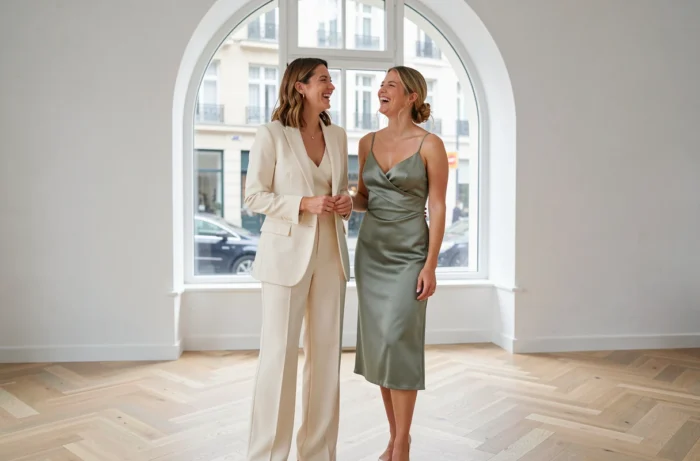
The pant suit offers the best potential for daily reuse, because the jacket and pants can be worn separately with other pieces. On the other hand, the jumpsuit is appealing for its ease: a single piece to slip on, an immediate elegant look.
The case of the short white dress
The short dress remains the most common choice for a civil wedding. Its practical advantage is real: town hall rooms, open to the public, are not always spacious, and a short cut avoids issues with trains or volume in a confined space.
To wear it again, pure white presents a readability problem. A white midi dress worn at a birthday remains identifiable as a “wedding dress.” Champagne, nude, or dark ivory tones circumvent this pitfall.
Accessories and shoes: transforming the register of a civil wedding outfit
The same ivory crepe dress produces a radically different effect depending on whether it is worn with pearly heels and a bouquet or with flat sandals and a structured bag. It is often through accessories that the transition between bridal outfit and everyday outfit occurs.
Shoes alone determine the register of the outfit. Minimalist white sneakers, worn with a bridal suit the day after the wedding, are enough to break the ceremony code. Conversely, keeping the same bridal heels visually anchors the piece in its original context.
Jewelry and bags: the least expensive transformation levers
A statement necklace worn on the big day can be replaced with a fine chain for dinner. A pearly clutch gives way to a structured leather bag. These simple permutations allow for dissociating the outfit from its nuptial context without altering it.
Dangling earrings, often chosen for the wedding, remain the most versatile pieces. They transition from a bridal wardrobe to an evening look without any adjustment.
Colors and materials that transition from civil wedding to everyday wardrobe
Pure white remains the quintessential symbolic choice. But for a bride planning to wear her outfit again, other options deserve consideration from the initial choice.
- Champagne and blush naturally blend into an evening wardrobe without immediately evoking a wedding
- Matte ivory satin works equally well in professional contexts as in ceremonies
- Blended linen offers a texture suitable for summer weddings and can be worn on vacation or at the office in warm seasons
- Graphic lace (geometric patterns rather than floral) ages better stylistically and detaches from the nuptial register
Conversely, tulle, organza, and beaded embroidery remain materials for almost single use. Their shine and volume tie them too closely to the ceremony to be worn in another context.
The choice of a reusable civil wedding outfit thus hinges on three parameters: the material, the cut, and the color must work outside the nuptial context. A piece that meets these three conditions justifies a higher investment, as it integrates sustainably into the wardrobe. Brides who opt for a pant suit or a separable set generally get the best balance between elegance on the big day and practical use in the months that follow.