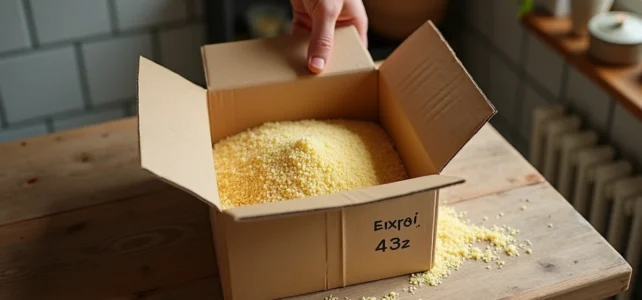
You are preparing a couscous and you come across a forgotten packet of semolina in the cupboard. The date printed on the packaging has been exceeded for several months. Your first instinct: straight to the trash. Semolina is a dry product, low in moisture, and the rules that apply to it are nothing like those for yogurt or a tray of meat. Understanding this difference helps avoid both waste and real health risks.
Mycotoxins and moldy semolina: the trap that cooking does not solve
Most articles on the subject focus on the distinction between DDM and DLC. This is useful, but it masks a more concrete and lesser-known danger: mycotoxins.
When semolina has absorbed moisture, molds can develop on it. Some produce mycotoxins such as aflatoxins, which are heat-resistant. Re-cooking the semolina does not destroy them. Thinking “I’ll just heat it up, it’ll be fine” is a false sense of security as soon as there has been any mold development, even slight.
Semolina that shows greenish or grayish spots, or an unusual powdery appearance should be thrown away. Not just the visible part: mycotoxins spread throughout the entire product. Removing the moldy area is not enough, unlike what is sometimes done with hard cheese.
To know if you can consume expired semolina, it is less about the date and more about the actual condition of the product, and mold remains the most serious warning signal.

DDM and DLC on semolina: two mentions, two logics
You may have noticed that some products bear the mention “best before” and others “use by”? The difference between these two formulations is the key to the issue.
The DDM (Minimum Durability Date) corresponds to the old DLUO. It appears on dry products, canned goods, and chocolate. It is a promise of optimal quality from the manufacturer: taste, texture, nutritional value. Once exceeded, the product may lose flavor, but it does not become dangerous simply because the date has passed.
The DLC (Use By Date) applies to fresh products like meat, fish, or dairy products. Here, the limit is sanitary. After the DLC, the risk of bacterial contamination actually increases.
Dry semolina always carries a DDM, never a DLC. Recommendations from the DGCCRF (updated in 2025) confirm this: a dry product whose DDM has passed can be sold and consumed if its appearance remains intact. The main issue remains taste quality, not microbiological safety.
Visual and olfactory tests for expired semolina
Rather than relying solely on the date, a simple examination of the product provides a reliable answer. Here are the checks to make before cooking semolina whose DDM has passed:
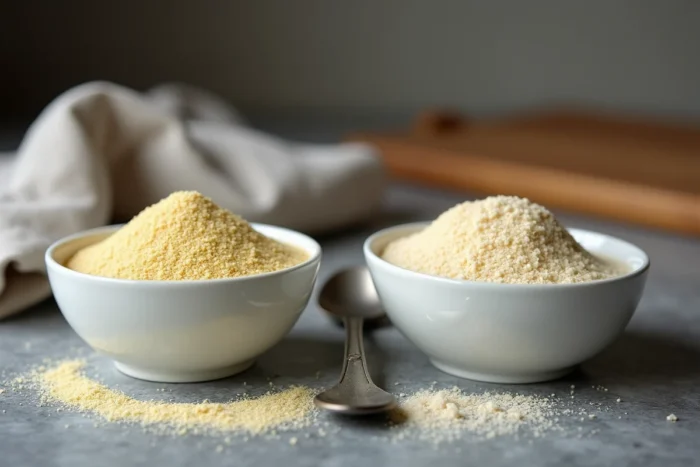
- Appearance: the semolina should retain its uniform pale yellow color. Black spots, colored stains, or a clumped appearance indicate deterioration. If the grains form compact blocks, it means moisture has been absorbed.
- Smell: open the packet and smell. Healthy semolina has a neutral, slightly cereal-like odor. Any rancid, sour, or moldy smell requires discarding the product.
- Presence of insects: weevils and pantry moths love cereal products. Small holes in the packaging, silky threads between the grains, or visible insects are immediate reasons to throw it away.
- Packaging: a puffed, punctured, or poorly sealed packet has exposed the semolina to air and moisture. Even without visible signs of deterioration, caution is warranted.
If the semolina passes these four tests, it remains consumable without notable risk. The loss of quality is then limited to a slightly less fine texture or a slightly muted taste.
The case of already opened semolina
An opened packet ages much less well than a sealed packet. Contact with air accelerates the oxidation of lipids (even in small amounts in durum wheat semolina) and promotes the absorption of ambient moisture. Semolina that has been opened for several months deserves more careful examination than an intact packet.
Storing semolina: mistakes that shorten its lifespan
The longevity of a dry product depends almost entirely on its storage conditions. A properly stored packet of semolina retains its qualities well beyond the DDM. Poorly stored, it can deteriorate even before the indicated date.
Three factors accelerate degradation:
- Moisture: this is the main enemy. A cupboard located above a cooking plate or next to a sink exposes the semolina to steam. A sealed glass or food-grade plastic jar protects much better than the original cardboard.
- Heat: a stable ambient temperature, around that of a living room, is suitable. However, an uninsulated garage where temperatures rise in summer promotes oxidation.
- Direct light: it degrades certain nutrients and can contribute to rancidity. A closed cupboard remains the best location.
Product recalls: what really threatens semolina
Recent recalls published on RappelConso concerning semolina and cereal products relate to chemical contaminants (ethylene oxides), unauthorized GMOs, or foreign body fragments. No recall concerns dry semolina simply being “too old.” The real danger does not come from the calendar, but from contamination at the source or poor storage.
Summary of situations where semolina should be discarded
Expired semolina is not a binary issue. A DDM exceeded by a few months on an intact and well-preserved packet poses no serious health problem. However, any trace of mold, abnormal odor, or presence of insects justifies discarding the entire packet, regardless of the date.
The most reliable reflex remains to transfer the semolina to an airtight container as soon as purchased, store it in a dry and cool place, and rely on your senses rather than just the printed date on the box.