A decorative item is not chosen from a catalog. The selection is based on technical criteria often overlooked by mainstream guides: material properties, behavior under light, dimensional compatibility with the room’s volume. We review the points that make the difference between a coherent interior and a haphazard assembly.
Biosourced materials and sustainable finishes: what changes the game in decoration
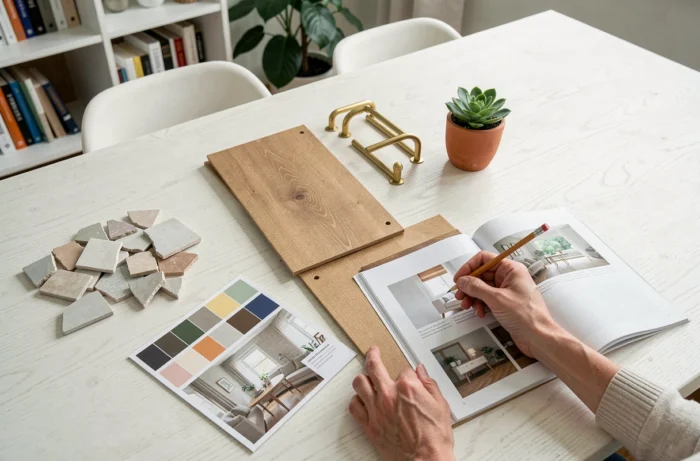
The decoration sector is undergoing a material transformation. Trade shows like Maison&Objet 2026 now showcase biosourced filament lighting molded or printed, wax worked as a decorative material in its own right, and accessories made from raw linen or reconstituted stone. These materials are gradually replacing thermoformed plastics and synthetic resins in mid-range and high-end collections.
The current logic can be summed up as buying less but better. An object made from certified solid wood or artisanal ceramic ages predictably, while a lacquered MDF accessory loses its appearance within months due to UV exposure. We recommend systematically checking the material composition before any purchase, including for small items (candle holders, frames, catchalls).
The European Ecolabel, which now covers furniture and certain decorative paints, provides a reliable benchmark for assessing the environmental impact of a product. Prioritizing pieces that meet these criteria also ensures better longevity, as specifications impose thresholds for mechanical and chemical resistance.
To build a solid foundation, NANANERE DÉCO’s equipment covers a wide range of categories, from lighting to textile accessories, with a sorting by type of material that facilitates this selective approach.

Earthy color palette and room volume: adapting equipment to the space
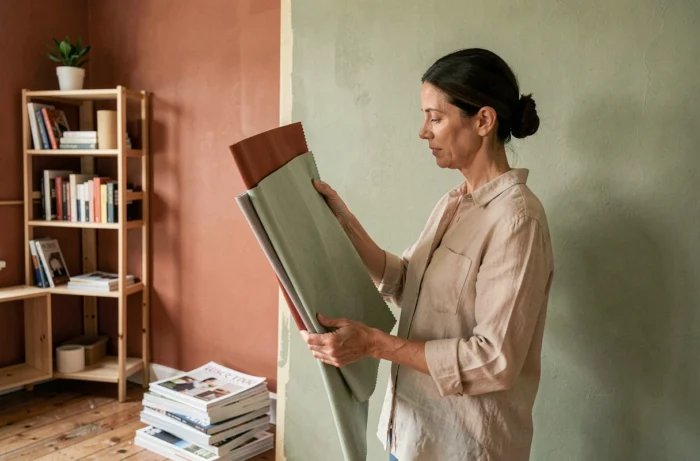
Trend analyses for 2026-2027 confirm a clear chromatic shift. Earthy colors (soft ochres, deep greens, warm browns, greys) are replacing the duck blues and mustard yellows that have dominated for several seasons. This shift has a direct impact on the choice of decorative items.
A brown stoneware vase or an ochre-dyed wool throw does not have the same effect in a fifteen-square-meter living room as it does in a forty-square-meter open space. The technical rule we apply: the smaller the volume, the more matte finishes and medium tones (neither too dark nor too light) preserve the feeling of space.
Often overlooked dimensional criteria
A large sculptural light fixture, no matter how successful, visually overwhelms a room with a low ceiling. Before finalizing a purchase, three measurements are sufficient:
- The ceiling height, which determines the maximum size of a pendant or floor lamp (beyond two-thirds of the available height, the object appears disproportionate)
- The depth of the furniture or shelf that will hold the item, as a vase too deep for a narrow console creates a visual imbalance and a risk of falling
- The distance from the main viewpoint (sofa, entrance to the room), which conditions the readability of a painting, mirror, or wall composition
These checks may seem basic, but the majority of decorating errors stem from a lack of proportion, not a poor stylistic choice.
Modular furniture and integrated storage: decorating without cluttering
The rise of modular furniture responds to a structural constraint: the average surface area of new homes is decreasing in urban areas. A decorative item that serves no practical function becomes a spatial luxury that many rooms cannot accommodate.
We observe a convergence between storage and decoration. Woven baskets made from natural fibers, open shelves in raw wood, and storage benches simultaneously fulfill both roles. The most effective approach is to first select furniture with dual functions, then add a few purely decorative pieces in the remaining space.
Prioritizing purchases by room
Not all rooms deserve the same decorative investment. The kitchen and bathroom are subject to humidity and splashes: materials must withstand these conditions (glazed ceramic, stainless steel, tempered glass). The living room and bedroom can tolerate more fragile materials (linen, untreated wood, papier-mâché).
- Living room: a sculptural light fixture as a centerpiece, complemented by two or three textile accessories (cushions, throw) in the chosen palette
- Bedroom: priority on soft textures and indirect light sources, with one or two decorative objects on the bedside table
- Kitchen: limit to aesthetically functional elements (glass jars, noble wood cutting board, pendant above the island)
- Entryway: a mirror to enlarge the space and a catchall made from a durable material are enough to set the ambiance
Decorative lighting: the technical parameter that enthusiasts underestimate
A decorative object changes radically in appearance depending on the color temperature of the surrounding light. A stoneware piece with warm hues appears dull under cold light above 5,000 kelvins. Conversely, lighting between 2,700 and 3,000 kelvins reveals natural textures (wood, stone, woven fibers) and enhances the coherence of an earthy palette.
The biosourced light fixtures spotted at recent trade shows play on this logic: the material of the fixture itself (wax, molded fiber) filters and diffuses light, creating an ambiance that is impossible to replicate with a conventional synthetic fabric lampshade. We recommend systematically testing a new decorative object under the actual lighting of the room before confirming the purchase.
The choice of decorative equipment benefits from being treated as a technical project as much as an aesthetic one. Verified materials, measured proportions, a palette coherent with existing lighting: these three filters eliminate most regrettable purchases. The rest belongs to personal taste, and that is where decoration truly begins.